Ten joints. Two colors.
Zero assembly.
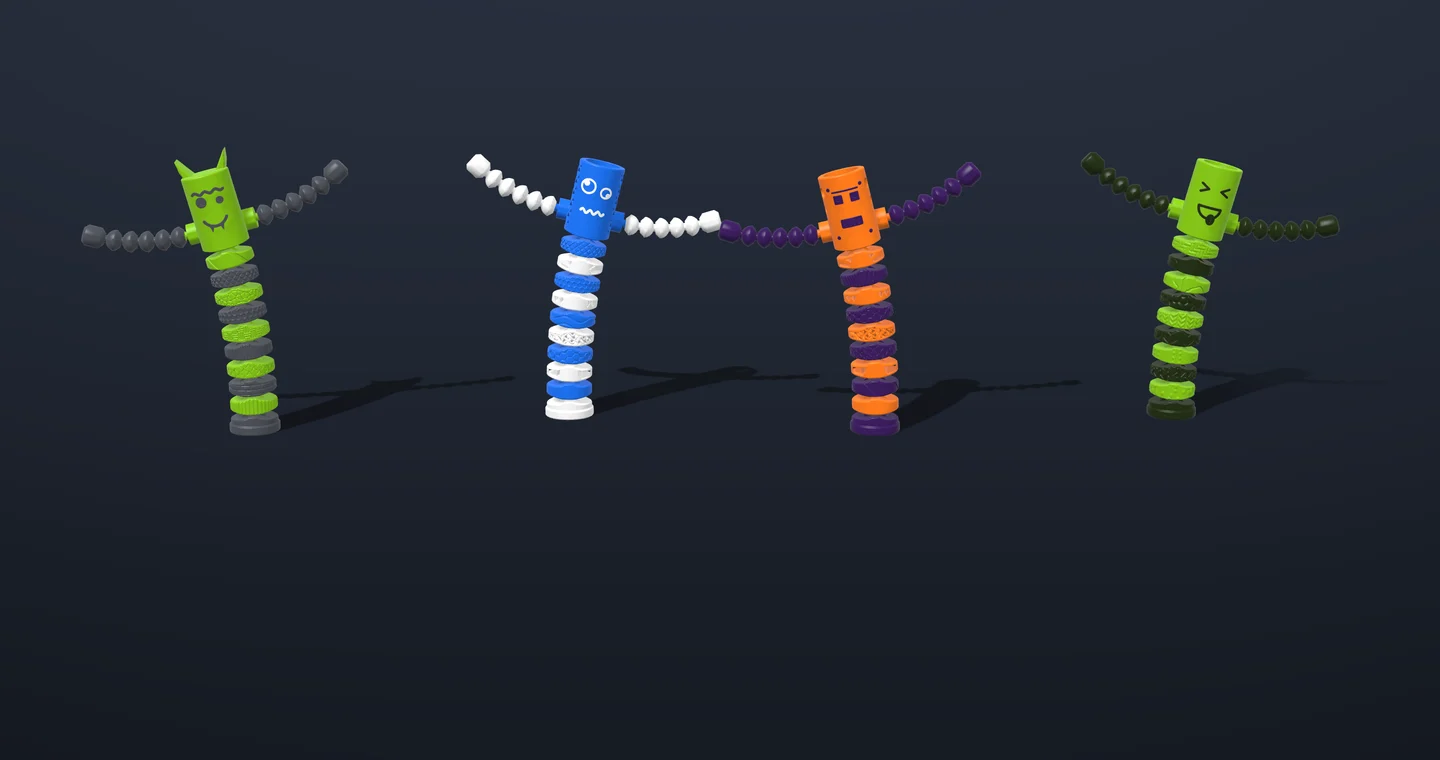
Wiggle Toys are print-in-place desk buddies for the shop, the office or the kids. Every joint prints already assembled, the arms ball-joint, the base takes a magnet, and the face is its own part so it prints in any color. One body, 85 toys, all free.
 3D render
- Toys
- 85 across 10 collections
- Print profiles
- 18, one toy per plate
- Joints
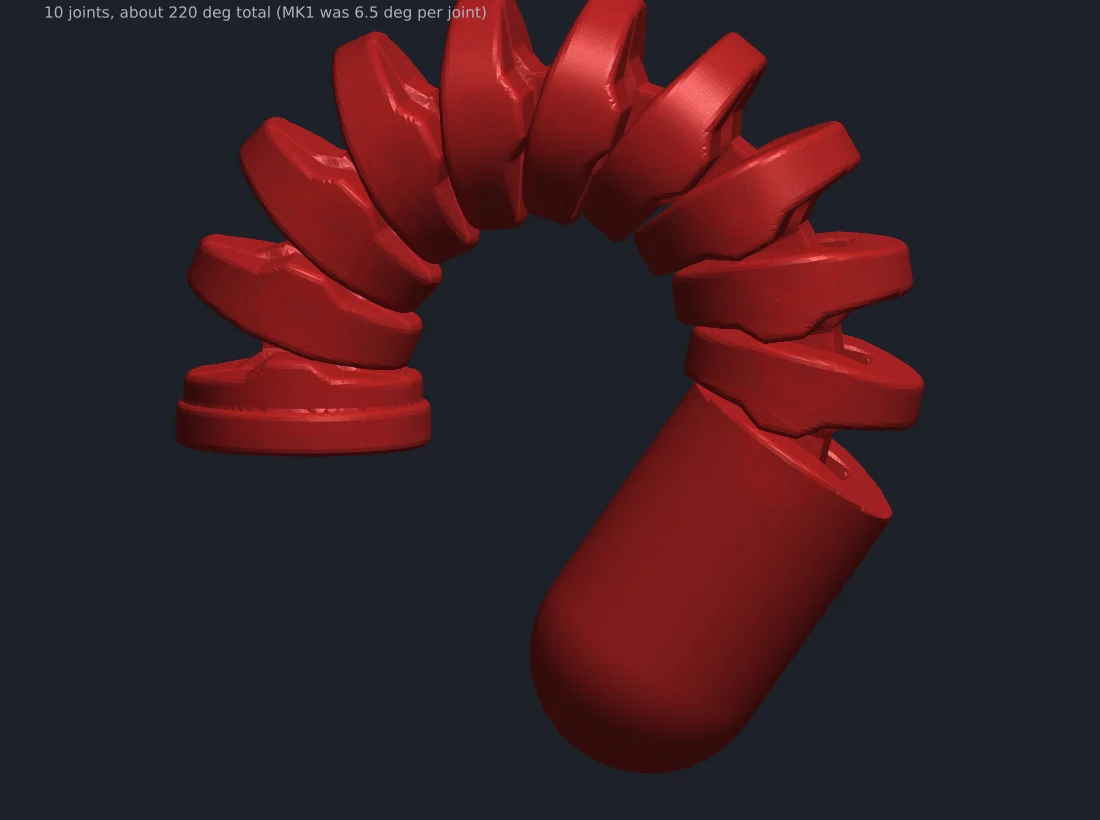
- 10 body joints, about 22 deg each
- Assembly
- None. Prints in place, flat, no supports
- Colors
- 2 filaments, face is its own part
- Status
- Test prints running, MakerWorld listing in draft
A toy is a good place to show your joints
The idea
A desk toy that shows what print-in-place can do. Ten stacked joints that swing about 22 degrees each, ball-joint arms, a magnet base, and a face that prints in its own color. One file, no assembly, no supports.
The engineering
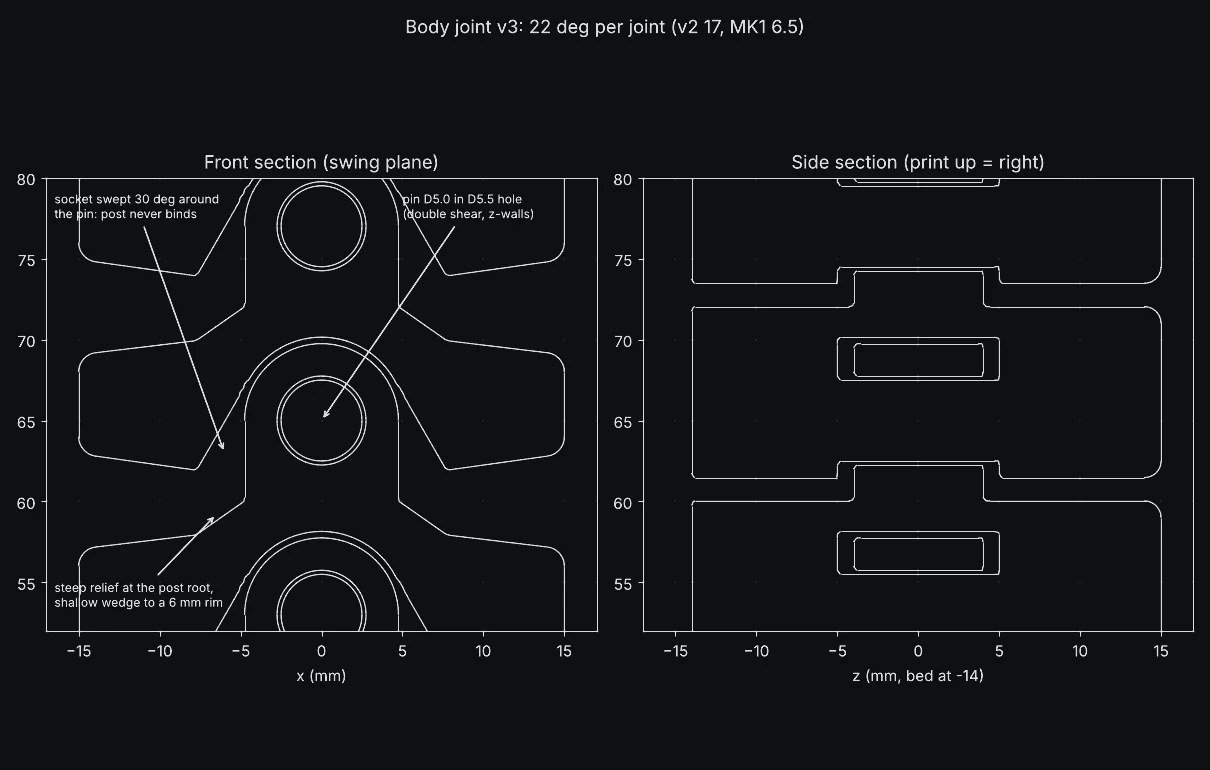
Every joint is a pin in a hole with a swept socket, so the post never binds and the pin sits in double shear. Clearances were set for a 0.4 mm nozzle and checked on the mesh, not guessed.
The result
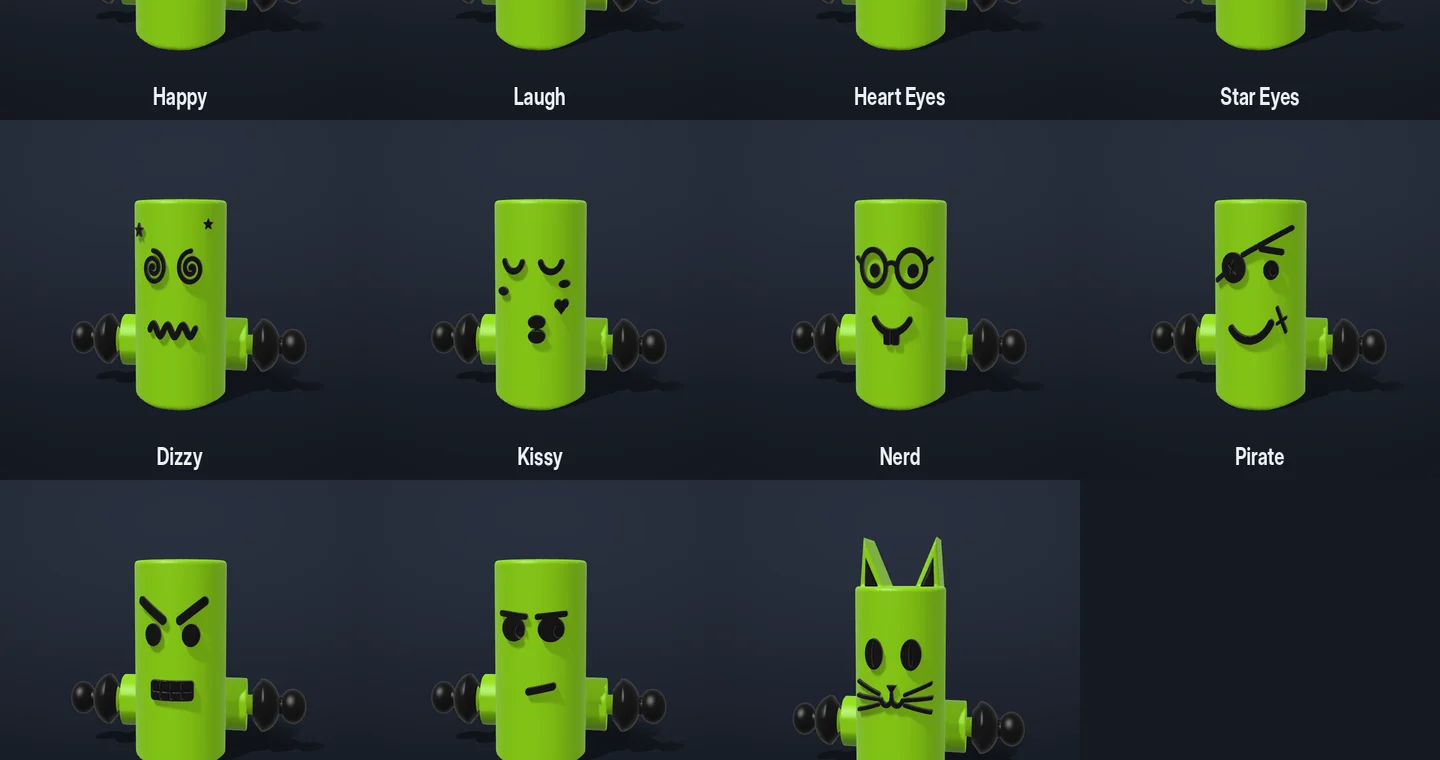
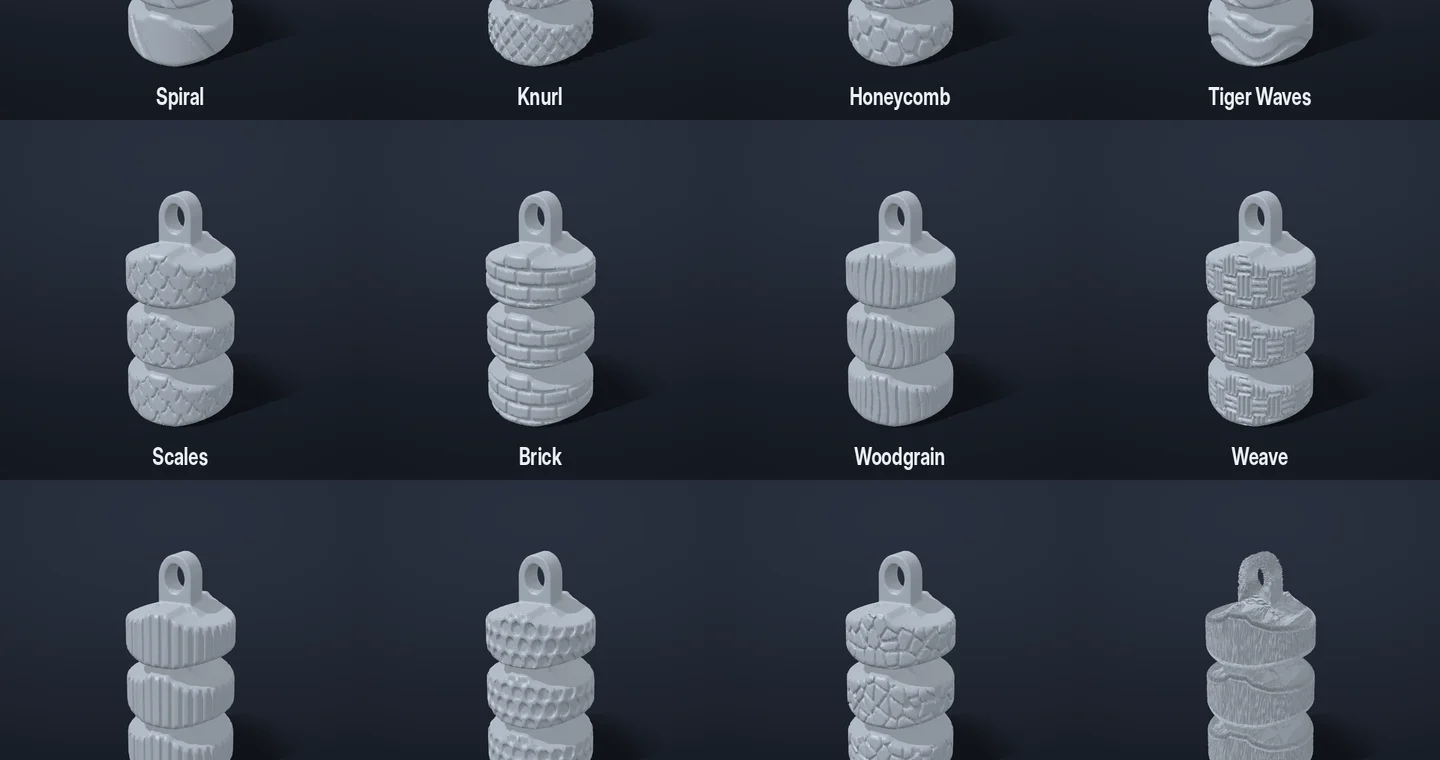
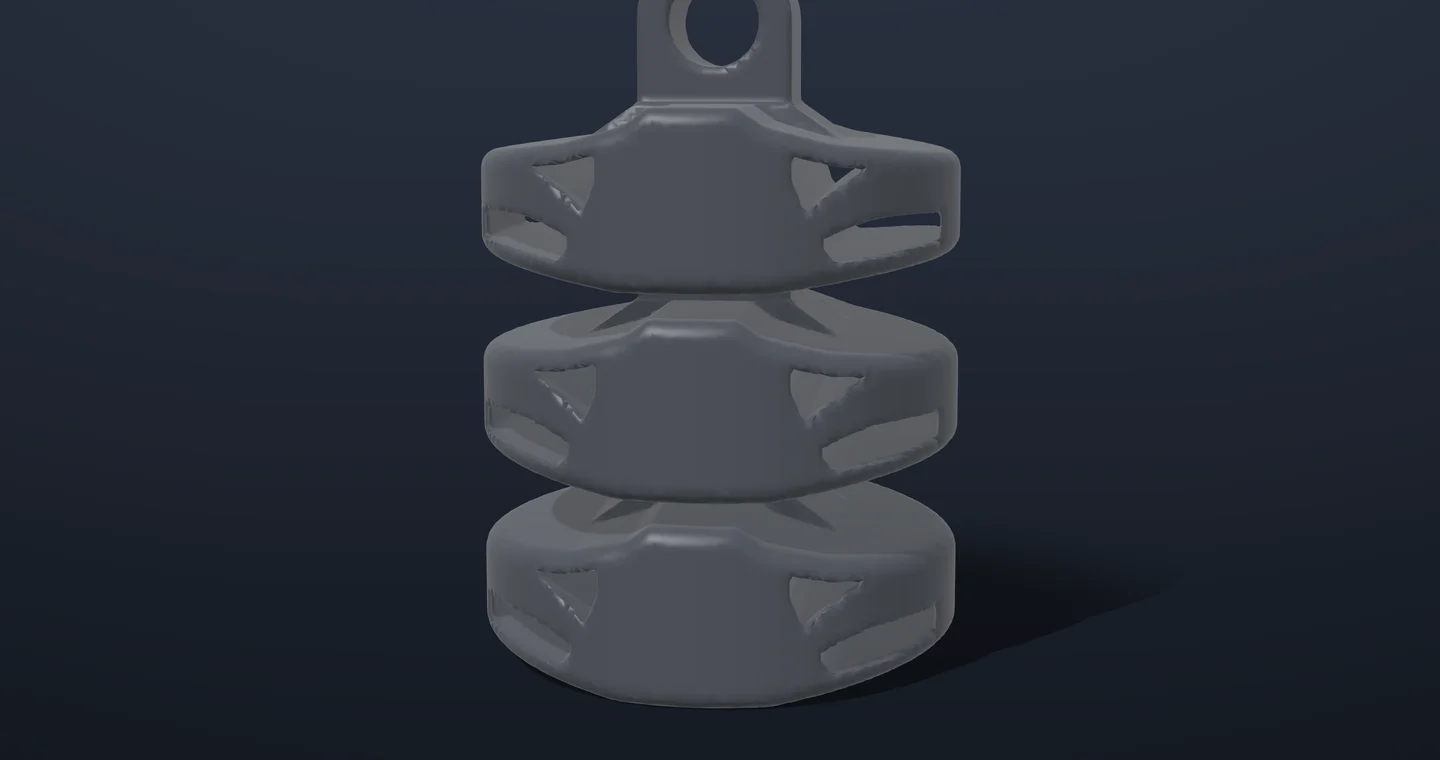
85 toys built from one parametric body: faces, characters, 21 textures, lattice and topo structures, 15 holiday versions and four sampler display pieces. All free, with print profiles ready to go.
Three features that do the work
Stacked swept-socket joints
Each segment carries a pin that prints inside the next segment's socket. The socket is swept around the pin so the toy can lean a full 22 degrees per joint without the post hitting a wall.
Ball-joint arms that print standing up
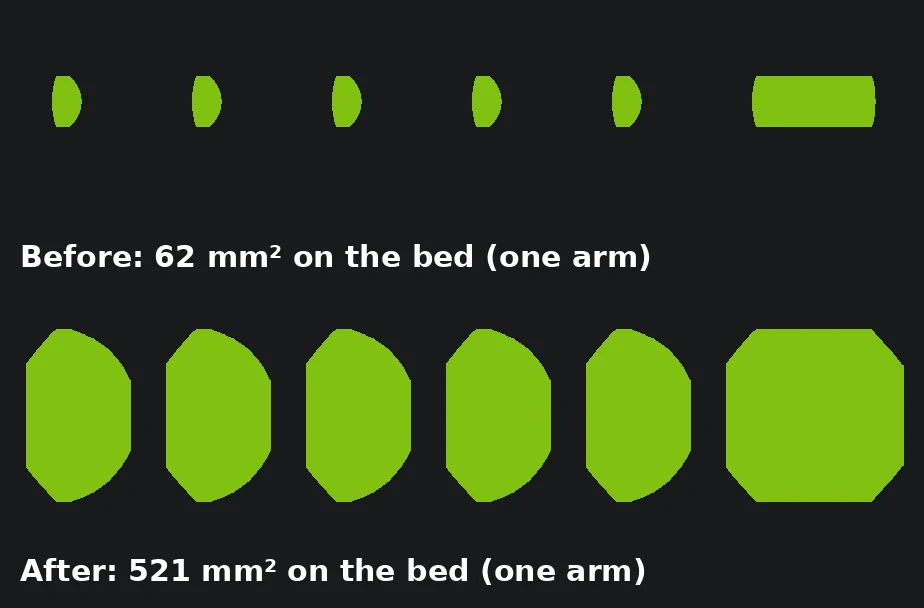
Each arm link is a ball in a socket with a 50 degree mouth. The first version had only 62 mm² of arm touching the bed. A flat foot on every link took that to 521 mm² with no loss of swing.
The face is a separate body
Faces, hat trim and accents are their own part in the file. On a dual-nozzle printer the whole toy prints in two colors with no filament swaps. Single nozzle gets a filament change at one layer.
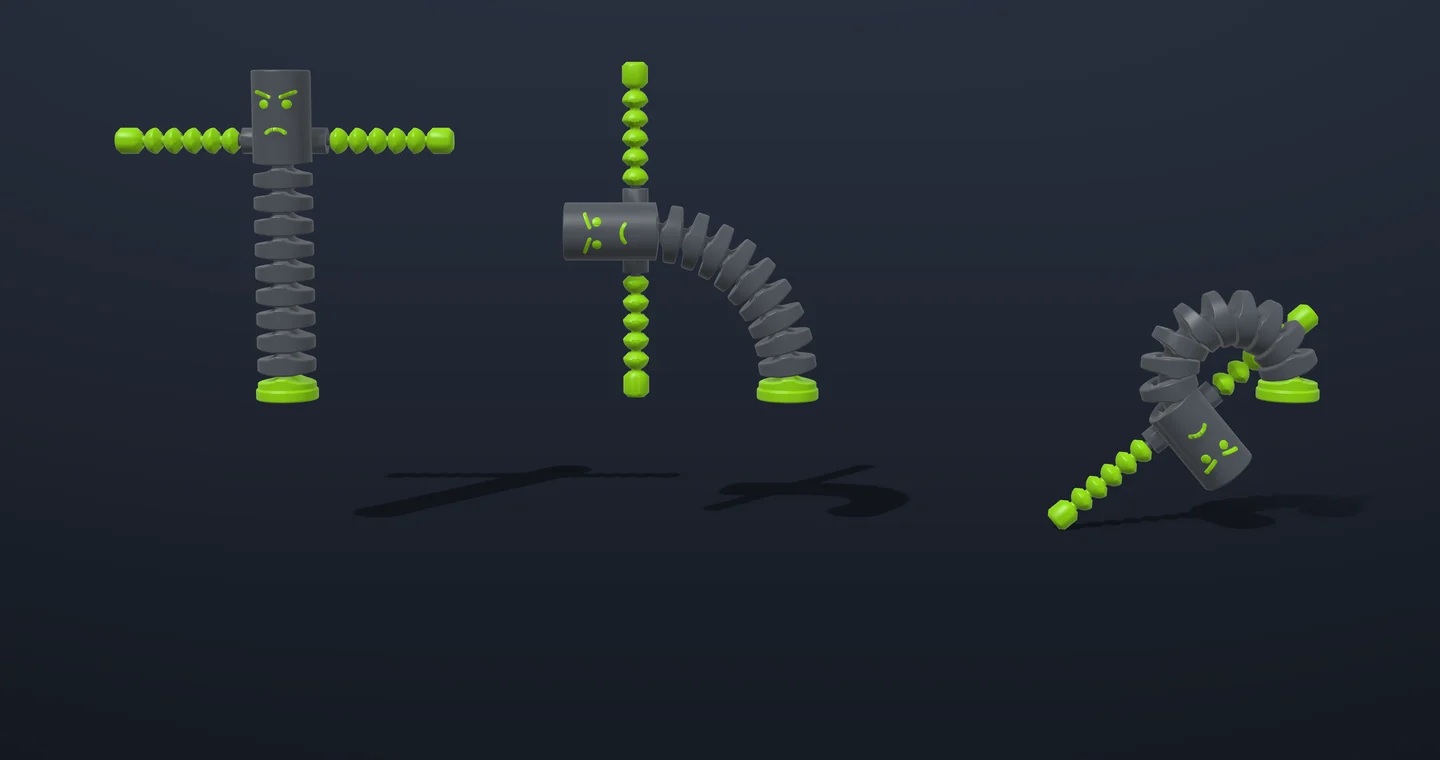
About 220 degrees of lean, straight off the bed
Faces, textures, structures and seasons
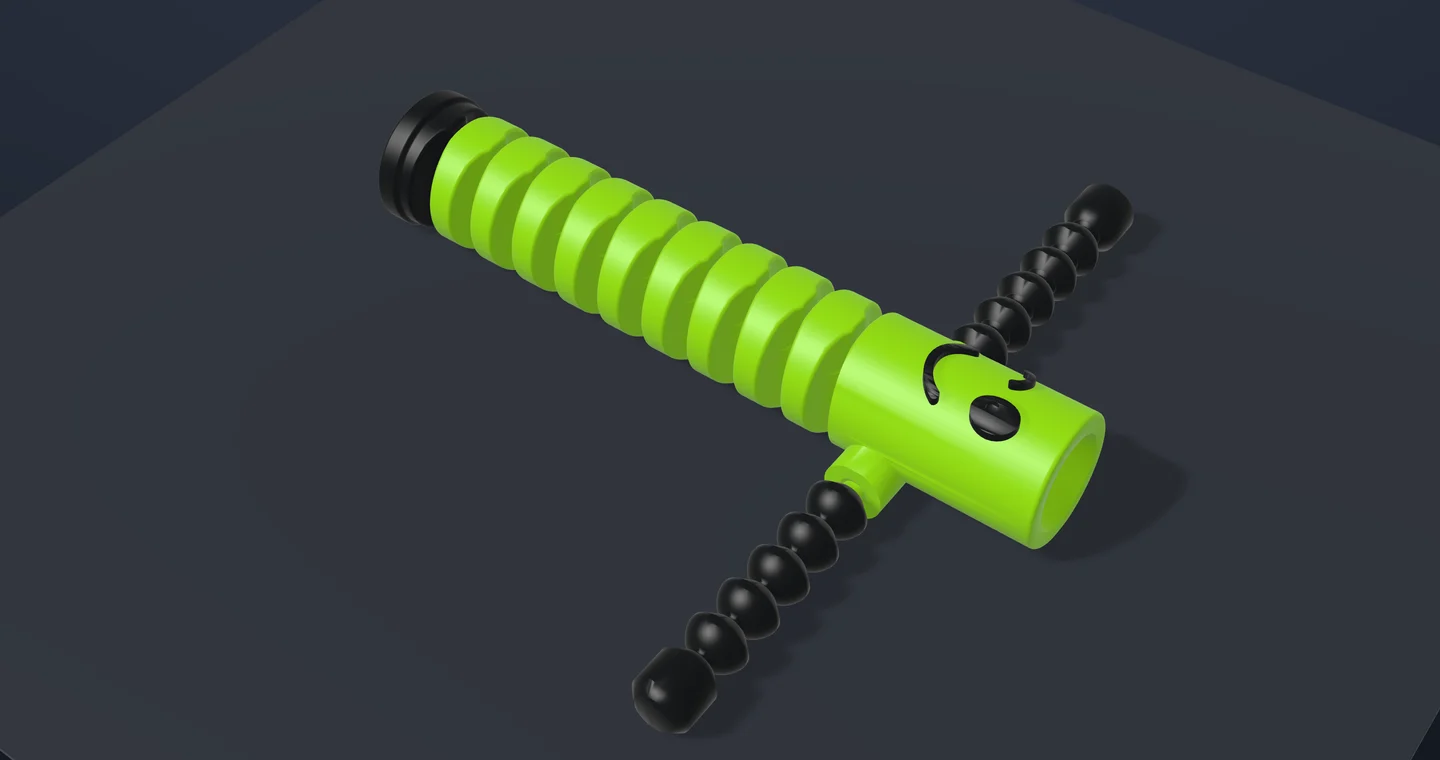
Flat on its back, no supports, add a magnet
Print notes
- Size
- 170 mm tall, about 174 mm across the arms
- Material
- PLA for the desk, PETG or ASA outside
- Supports
- None. No brim either
- Magnet
- 20 mm disc glued into the base
Flex every joint once after printing to break the skin. Then it moves for good.
How 85 toys came out of one model
- 01
Parametric body
One Inventor body with named parameters for segment count, joint clearances, rim and post. The variants are inputs, not remodels.
- 02
Rule-driven builds
An iLogic builder reads a recipe file and writes the part, STEP and STL for each toy. Three Inventor sessions built a batch of 12 in about six minutes.
- 03
Mesh checks
Every STL checked for closed shells, non-manifold edges, floating parts and volume against the CAD before it went in a print file.
- 04
Textures as math
Groove and relief skins are height fields cut 0.6 mm into the segments, so a texture can never reach a joint or change the swing.
- 05
Rendered, not photographed yet
A WebGL renderer in headless Chromium turned out the gallery in nine colorways. Real print photos replace the renders as the test prints finish.
- 06
Packaged for MakerWorld
18 sliced profiles, one toy per plate, a print and play guide, and a license that keeps the files free but not for resale.
Next up: test prints of the slim, lattice, textured and two-color toys, then real photos, then the whole package goes up on MakerWorld as a free download.
What this means for your project
Clearances that print, not clearances that look right.
Hinges, snaps, ball joints and captive pins all come down to a few tenths of a millimeter and the right orientation. I design them for the printer you have and check the mesh before it ships.
One parametric model, as many variants as you need.
Your logo, your colors, your mascot. A rule-driven CAD model turns a family of variants into a list of inputs, with print files and renders that come out of the same pipeline.
Want a toy, a giveaway or a product family of your own?
Tell me what it needs to do and who it is for. I reply within 2 business days.
Start a project→